Case Studies and Feedback
Case Studies and Feedback
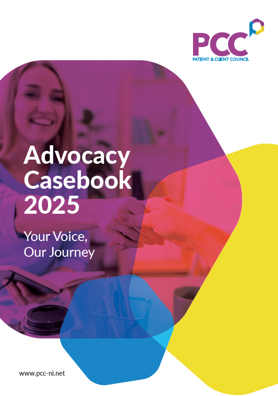
PCC Advocacy Casebook
|
|

As part of our statutory functions, the PCC provides an independent, professional and free advocacy service for those that have issues in health and social care in Northern Ireland.
Every year we support over 600 cases, emphasising the importance of independent advocacy in addressing issues through partnership, mediation and a relationship based approach. As well as delivering better outcomes for the public, this approach can offer the opportunity for upstream learning and prevention, increase staff morale, build trust and confidence, and maximise limited resources in a system under strain. This drive towards restorative practice is reflected in 58% of our cases achieving a timely resolution in 2025-2026.
This Casebook provides a snapshot into the work of our PCC Support Service and provides insight into how independent, professional advocacy can positively impact on people’s lives; helping them to have their voice heard, uphold their rights and address inequality. It illustrates the diverse range of people who access independent advocacy services in Northern Ireland and the breadth of issues supported by the PCC. Advocacy interventions can impact most when people need specific and tailored information or support. The Casebook demonstrates the different forms of advocacy, including empowerment and representative advocacy, in situations that are often emotionally charged for both the people receiving support and the staff involved. It shows the critical importance that Independent Advocacy can have in a restorative approach.
We hope that these case examples provide rich insight into how PCC can support members of the public within health and social care, highlighting the importance of independent advocacy and showcasing the positive impact we have had in people’s lives, in communities and across the wider system. Advocacy helps breach gaps in systems that leave people in difficult situations. It ensures best practice across public services, and it promotes positive systemic change when necessary.
Previous Casebooks:
 |
||
|
|
 |
 |
 |